
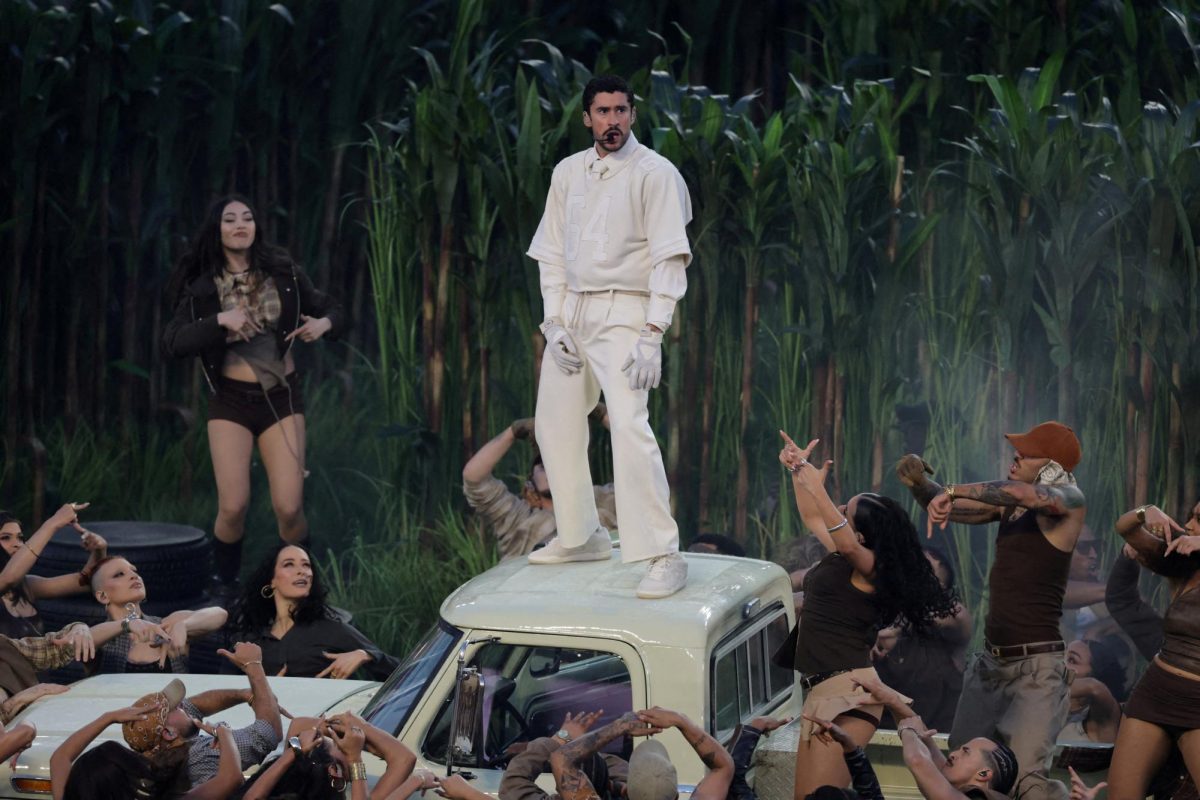
On Feb. 8, 2026, Benito Antonio Martinez Ocasio, known professionally as Bad Bunny, delivered the highly anticipated halftime show at the 60th annual Super Bowl. The performance marked the first halftime show headlined entirely in Spanish and featured guest performances by Lady Gaga and Ricky Martin. Packed full of references to Latino history, culture and art, the performance was an unforgettable one.
The opening scene featured farmworkers in a field, reflecting the shared experience of thousands of Latinos in the United States. Walking through the tall grass on the field, Bad Bunny highlighted several Latino-owned businesses, including a piragua (shaved ice) stand, a nail artist and a taco stand. There was also a scene featuring Puerto-Rican boxer Xander Zayas and Mexican-American boxer Emiliano Vargas, representing Mexico and Puerto-Rico’s long rivalry in the sport. His set to “Yo Perreo Sola” showcased the upbeat and carefree nature of reggaeton, featuring a blend of dancers across the field. His iconic pink house, known as “La Casita,” was also featured, reflecting the vibrant, simple homes typical of Puerto Rico.
His dramatic exit from the house, where he appeared to fall through the roof, led to a musical blend teasing “Gasolina” by Daddy Yankee, as well as tracks from Tego Calderon, Don Omar and Hector el Father, icons of reggaeton. As one of the world’s top reggaeton artists, he spotlighted Puerto Rico’s musical pioneers on a global stage, declaring “You’re listening to music from Puerto Rico!”
Next came the iconic violin intro to “Monaco,” featuring several professional mariachi musicians, including violinists from Mariachi Divas, an all-female mariachi group based in Los Angeles. Football in hand, Bad Bunny delivered a personal message crediting the hard work that led up to the Super Bowl performance, stating, “And if I’m here today at the Super Bowl LX, it’s because I never, never stopped believing in myself. You should also believe in yourself. You’re worth more than what you think – believe me.”
The camera then panned to a bride and groom as they were officiated and their wedding began. As the music started and the guests danced, the stage cleared to reveal Lady Gaga, singing a salsa rendition of “Die with a Smile.” She evoked the image of the original Puerto Rican flag, with a light blue dress and bright red flower standing out against her pale skin and hair. Together, they danced to kick off “Baile Inolvidable,”, displaying the energetic yet intimate atmosphere present at Latin weddings and proving that people do not have to be Latino to enjoy and partake in the culture. From a child asleep on a chair to other kids running around the guests, the scene reflected childhood memories many Latinos share at family gatherings.
Next up, his performance to “Nueva Yol” highlighted the Latino community in New York, specifically Tonita’s Caribbean Social Club, where the owner Tonita herself was present. The dancers featured a mix of dembow, native to the Dominican Republic, and salsa steps, showcasing the unique blend of dance and music where Latin America and the Caribbean overlap. Highlighting his recent Grammy win, he appeared to give a younger version of himself the Grammy, showing how achieving a childhood dream is possible for anyone.
He also shed light on recent issues in Puerto Rico, such as gentrification and the widespread power outage. Ricky Martin was featured singing to “Lo Que Le Paso A Hawaii,” whose lyrics draw a parallel between Native Hawaiians and Puerto Ricans who have faced corruption on their islands and were forced to leave. His performance was significant given his own career trajectory, as he only gained mainstream recognition after releasing English-language albums. Bad Bunny’s set to “El Apagon” highlighted Puerto Rico’s struggles and resistance, referencing the island’s major power outages since Hurricane Maria in 2017.
To close off the show, dancers ran across the field, carrying varying flags as Bad Bunny delivered one last message: “God bless America.” He then listed countries across the Americas and the Caribbean, holding up a football reading “Together we are America” as “Debi Tirar Mas Fotos” played during his exit. The moment delivered a powerful message in today’s political climate, emphasizing that America extends beyond the United States and that its diversity is a strength, reflected by the blend of music, dance and visuals.
The entire show highlighted Latin Americans’ prevalence in the United States and moved the audience with music, storytelling and a message that transcends language barriers. More than a simple entertainment spectacle, Bad Bunny’s halftime show served to give the audience insight into Latin American culture, struggles and art, while asserting its place in the broader American identity.