
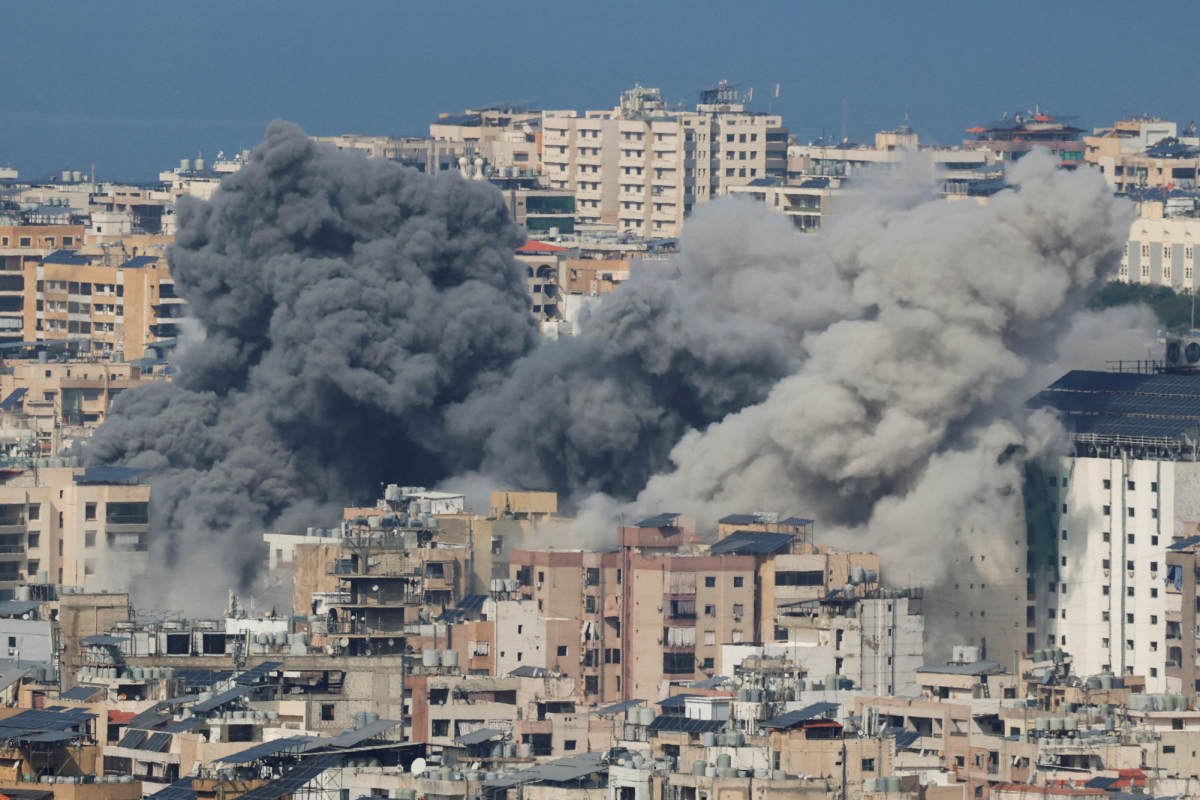
Saturday, Feb. 28, saw the United States and Israel launching strikes on Iran amid negotiations between the two nations over Iran’s nuclear program, killing both Iran’s Supreme Leader and over 500 civilians within the first week.
Following the United States’ Operation Midnight Hammer on June 22, 2025, Donald Trump declared Iran’s nuclear program to be effectively crippled; but following an accountment from Special envoy Steve Witkoff, Iran is supposedly a “week away” from enriching uranium, an important material in nuclear bombmaking. He claimed Iran’s enrichment level has reached “60 percent.”
Operation Midnight Hammer was motivated after Israeli forces accused Iran of being “weeks away” from developing a nuclear weapon. This recent operation, Operation Epic Fury, has similar motivations, but far more ambition.
Following the strikes on Iran, Epic Fury responded with attacks on various areas in the region, including Israel, Saudi Arabia, Qatar, the United Arab Emirates, Bahrain and Iraq. Multiple countries, alongside Israel closed their airspaces in response to the conflict.
Amid the strikes on Feb. 28, a girls’ elementary school was struck by one of the missiles. Iranian authorities report the death toll to be 165 people, most of them young girls, with more injured and buried under the rubble. There have been questions as to who was responsible for the missile.
A viral image posted online shows the trail of a missile supposedly malfunctioning before crashing, leading some to speculate the missile was actually Iranian, but fact checkers with CNN geolocated the photo to Zanjan, a city 800 miles away from Minab where the school is located.
The school was adjacent to the Islamic Revolutionary Guard Corps Base, but has reportedly been separated for at least ten years. Many have come to the conclusion that the missile belonged to either Israel or the United States.
As of early March, preliminary military investigations by the New York Times have found that the United States is responsible for the strike, as tomahawk missiles, one of which being what destroyed the school, are only used by one country in the current conflict: the United States. Trump responded, “I don’t know about that,” when questioned about the article, while White House Press Secretary Karoline Leavitt expressed caution with the findings, stating that the “investigation is still ongoing.”
The United States has begun a “major combat operation,” intending not only to disable Iran’s nuclear capabilities, but to invoke regime change as well. Ali Khamenei, Iran’s former Supreme Leader, was killed in the strikes, leaving the future of the nation unclear. Many wondered whether Iran would face revolution from opposition supported by the United States, or if the current government will keep power.
March 8 saw the appointment of Iran’s new supreme leader, Mojtaba Khamenei, the son of the late Ayatollah. He is considered more conservative than his father, and his appointment has been met with “disappointment” from Trump.
As a result of the conflict, the Strait of Hormuz, a narrow waterway connecting Iran, Saudi Arabia, Bahrain, Qatar and the United Arab Emirates with the Arabian Sea, has been closed. This puts gas prices at risk, and energy stability for dependent countries is uncertain.
A notable ally of the United States, Japan, has decried the United States for not giving them prior notice to the strikes. Furthermore, Japan heavily depends on the oil exported from the Middle East, with around 70% of their imports coming from the Strait of Hormuz.
So far, the Pentagon has reported seven American troops have died due to Iranian retaliatory strikes, and that 140 are injured. Chief Pentagon spokesman Sean Parnell expressed that, “the vast majority of these injuries have been minor.”
President Trump has made various remarks about the conflict, first announcing it will last around four weeks, then eight, and that more U.S. service members may die before the conflict is over, “the lives of courageous American heroes may be lost and we may have casualties, that often happens in war.”
The claims have incited outrage online as many have equated Trump’s words to a quote from the villain of the first Shrek movie, Lord Farquaad, “some of you may die, but that’s a sacrifice I am willing to make.”
A student at Lake Land College had this to say about the quote: “Why are we allowing a man who cheated his way out of the draft to send our own sons and daughters off to a war the American people never asked for?”
March 13, following almost two weeks of conflict, at least 2500 marines are being sent alongside warships to Iran according to the Pentagon as the Strait of Hormuz remains closed by Iranian forces. Amidst this closure, however, Iran has continued to send millions of oil barrels to China, securing necessary income during the conflict.
President Trump announced strikes on Iran’s Kharg Island, an area integral to oil exportation as nearly 90% of oil tankers are loaded there for international shipping, it is a vital site for Iran’s economy. Trump posted on Truth Social, “Moments ago, at my direction, the United States Central Command… obliterated every MILITARY target in Iran’s crown jewel, Kharg Island… I have chosen NOT to wipe out the Oil Infrastructure on the Island.” Though he warned that any interference in the Strait of Hormuz might lead to him retracting that decision.
The strike is yet another escalation in the conflict which could lead to Iran retaliating with further strikes or even placing mines within the currently closed Strait of Hormuz.
In 2011 Trump had made a statement about former President Barack Obama, stating, “our president will start a war with Iran because he has absolutely no ability to negotiate. He’s weak, and he’s ineffective. So, the only way he figures he’s going to get reelected… is to start a war with Iran… This is a great time to negotiate. Unfortunately, we have a president that doesn’t know the first thing about negotiation. We have a real problem in the White House.”