
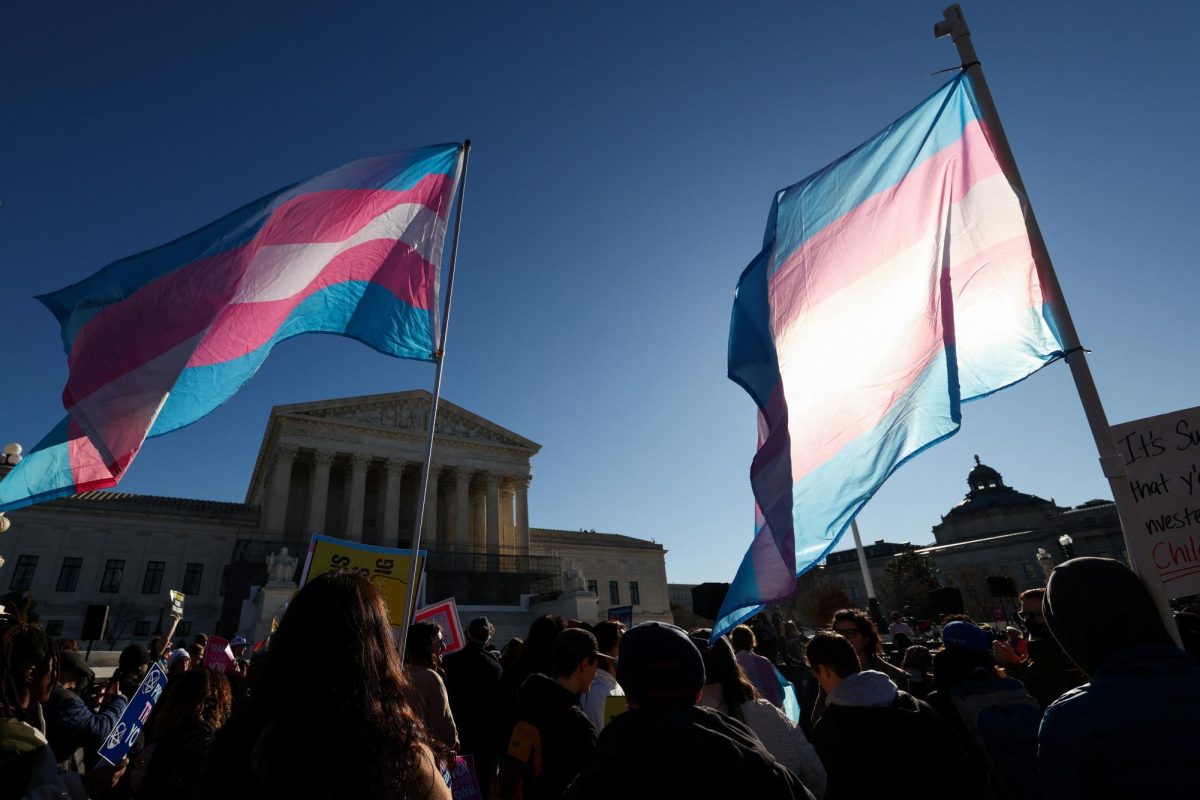
Over 1,700 transgender citizens of Kansas have lost their ability to drive legally due to Kansas passing a law invalidating licenses of those who have had their gender markers changed. Notices were sent via mail that their licenses would be “invalid immediately” unless they surrender their licenses and get new ones with their birth sex on them. Two residents sued the state of Kansas for violating the state’s protections of personal autonomy, equality and freedom of speech and expression. Douglas County District Judge James McCabria declined to block the law, stating there is “no evidence” that the law is harmful towards transgender people.
Additionally, a bill nicknamed the “Bathroom Bounty” bill allows for those who believe they have shared a bathroom with a transgender person to be able to sue them for “damages” of at least $1,000. This does not just harm transgender people – anyone even suspected of being transgender can fall victim to this law and is liable to be sued. Individuals who use what is deemed the “wrong bathroom” get a warning on their first offense, a $1,000 fine on their second offense, and are charged with a Class B misdemeanor on their third offense.
I spoke with six transgender students at Lake Land and asked them about the aforementioned bills. On the topic of the Bathroom Bill, one student brought up “[cisgender] men with gynecomastia who might get flagged as a trans woman, or of the [cisgender] women with cancer who without their hair or breasts might be mistaken as a trans man. These changes don’t just affect trans folk, they affect everyone.” Another student stated, “I think laws are to protect people, not to take away from freedom of expression and being yourself…Law shouldn’t just protect straight or trans [people] or whatever, it should equally defend all.” Another shared that “suing is just blatantly attempting to take the livelihood of transgender people.”
No student argued in favor of the bills, and all agreed that these bills were discriminatory against Transgender citizens. All students expressed concern about the possibility of these bills being passed in other states.