
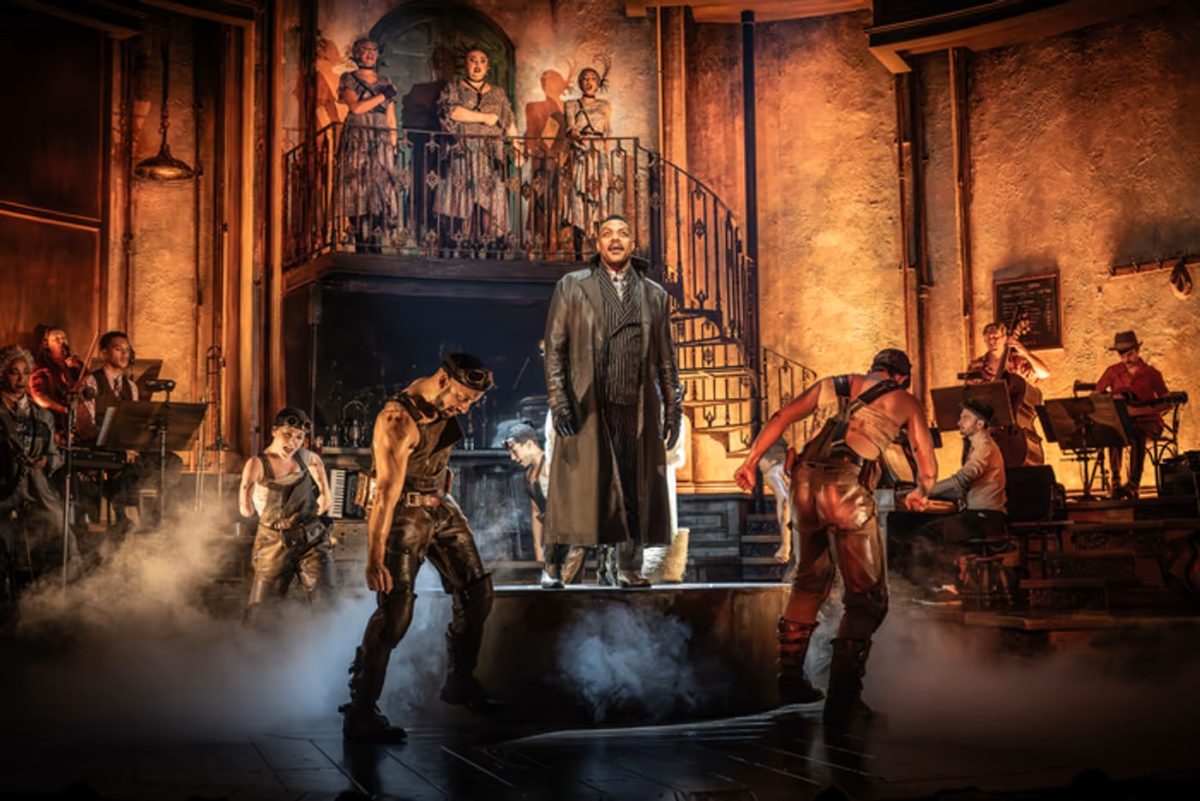
Anaïs Mitchell’s “Hadestown” is a Tony Award-winning musical and a retelling of the ancient Greek myth of Orpheus and Eurydice. The story is set in a post-apocalyptic world, heavily inspired by the French Quarter of New Orleans. The music matches the setting, consisting of soulful folk and jazz scores. The story centers on Orpheus’s quest to rescue the woman he loves, Eurydice, from Hades, the ruler of the underworld. Throughout the musical, it becomes clear that this story tells a cautionary tale of doubt and power, and how that can affect everyone involved.
One of the strongest messages in “Hadestown” is its criticism of greed, specifically how those in power exploit others for their labor using fear, hunger and desperation. Hades’ obsession with ownership of land, labor, progress, and even Persephone reveals how greed can put those in power on a pedestal and dehumanize those beneath them.
“Hadestown” itself functions as a metaphor for an exploitative economy. The workers are endlessly building the wall, while never benefiting from it. Their labor empowers Hades even more, while keeping themselves trapped in the cycle of overworking and obedience. The moral teachings are evident. The wall becomes a symbol for how the rich deliberately create systems that trap workers into doing their bidding.
Eurydice’s decision to go to Hadestown stresses how poverty forces people to make choices against their own interests because, “the enemy is poverty, and the wall keeps the enemy.” She does not choose Hadestown out of greed or because she wanted to, but because she felt it was the only choice left for her. Her hunger leaves her with no other alternatives, which exposes how the system gives its victims the illusion of choice. Her “greed” is not shown as a character flaw, but rather something deeply embedded in a society working against her.
Hades’ fear of rebellion and loss of control is what drives him to work others into the ground. Ironically, this fear is what drives away the very thing he was working towards protecting. Persephone now sees him as a cold and heartless man and no longer feels the love they once had.
However, the musical also expresses that greed can be fought through with solidarity. Orpheus’s song unites the workers and reminds them of a hope they lost a long time ago claiming, “If you can do it, so can she. If she can do it, so can we.” By gaining Hades’ attention, Orpheus proves that nobody is in a hopeless situation.
Ultimately, “Hadestown” stresses that a world of wealth is a world without empathy. By using love, music and a classic tragedy most people have heard of before, this musical opens its listeners’ eyes and hearts to “A world we dream about, and the world we live in now.”