

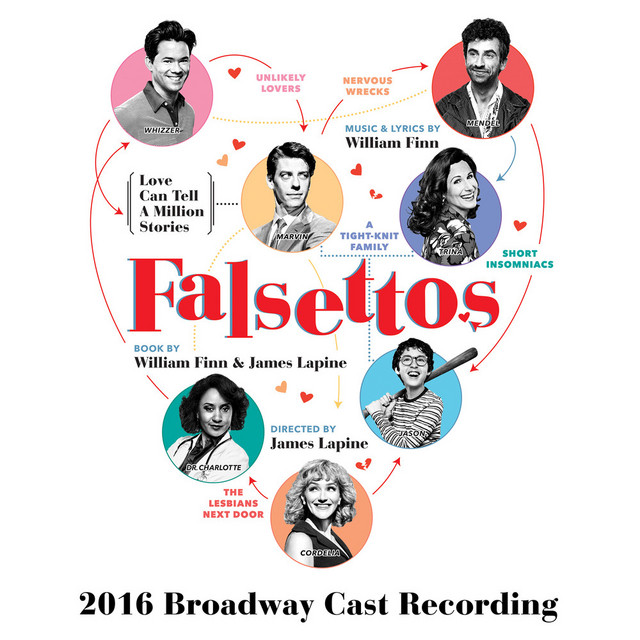
Written by William Finn, “Falsettos” is a Broadway musical that premiered in 1992. It is a combination of two previous one-act musicals, “Falsettoland” (1981) and “March of the Falsettos” (1990).
It follows Marvin, who has left his wife Trina for another man named Whizzer. He still cares for his wife and his son, Jason, but struggles to maintain a relationship with them. The family psychiatrist, Mendel, proves unhelpful, as he is in love with Trina. Marvin deals with his strained relationship with his son as Jason approaches his Bar Mitzvah. During the second act, Whizzer comes down with AIDS, which leads the entire “tight-knit family” to come together despite their differences and dislikes for each other.
“Falsettos” dives into themes surrounding the AIDS epidemic, as well as Jewish identity, queerness, gender roles and differing family dynamics.
Jewish identity is explored through Jason’s avoidance of a Bar Mitzvah in the time of Whizzer’s illness. This causes strain in the family, because every Jewish boy is expected to have one. The line between Judaism as an identity and Judaism as a religion is shown, and what that difference can mean to people.
Gender roles are explored through Trina and Whizzer. Trina makes desperate attempts to be a good wife and mother, despite the dynamics in her family that do not exactly demand this from her. They are also explored through Marvin attempting to push Whizzer into a wife-like role because that is what he was used to being able to do with Trina.
Family dynamics are a central aspect of “Falsettos.” This group of characters and their relationships lead to a family different than what is typical, but full of people who care for one another the best they can. “Falsettos” shows that family does not just have to be people you’re directly related to: it can be any support system of people that you surround yourself with.
Falsettos is a fantastic musical and has been a favorite of mine for about six years. The music and themes are very well written, and I believe it serves as good representation for those who experienced the AIDS epidemic and societal attitudes towards queer people in that time.