
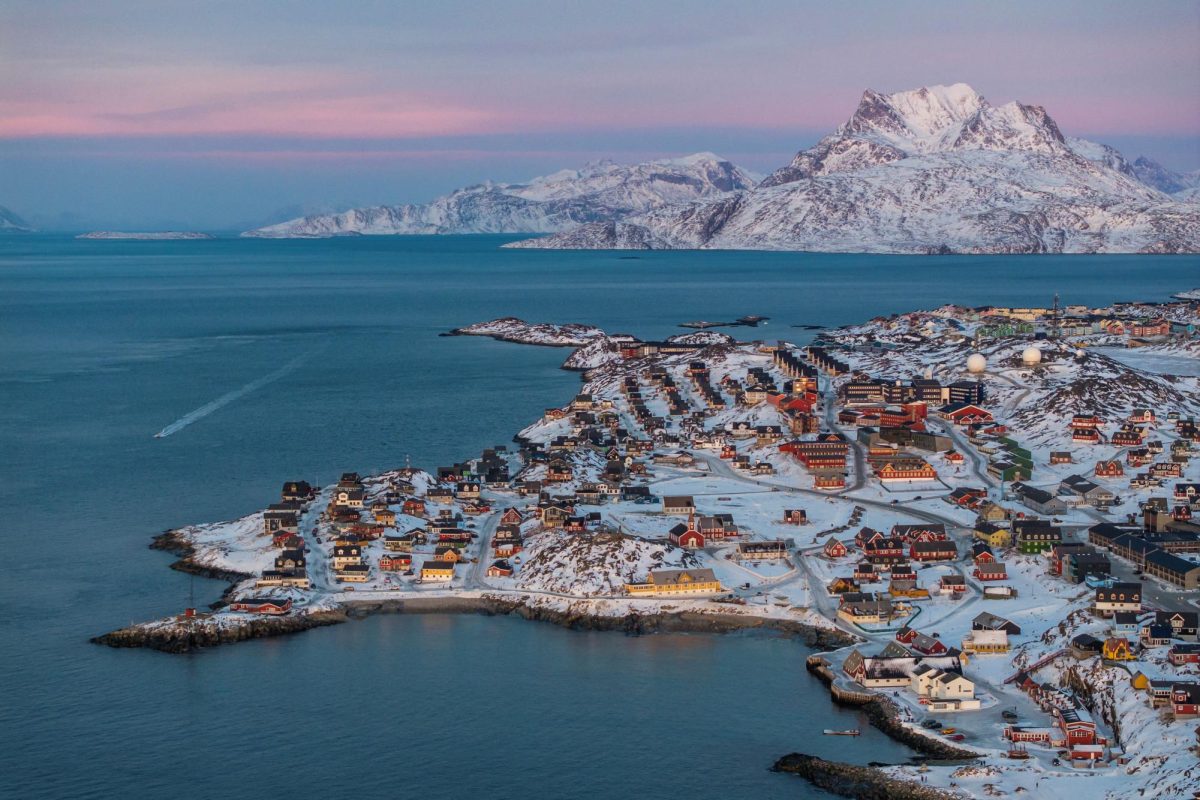
If you have been tuning into the news to any degree since the new year, you might have heard President Donald Trump talking about Greenland, the world’s largest island, 80% of which is covered in ice. Greenland is a Danish Territory, under the law of Denmark, but Trump has been making claims to the Island, saying he would “do something in Greenland, whether they like it or not.” What spurred this on, and how did we get here?
All the way back in 2019, during Trump’s first term, Trump had floated the idea of acquiring Greenland, but never went further than considering it, and a sale of the Island was refused.
Jump to December 2024, and Trump was preparing to return to office for a second term with newly emboldened ambitions, including the acquisition of Greenland. He wrote in December that “the ownership and control of Greenland is an absolute necessity” on Truth Social while appointing PayPal co-founder Ken Howery as the ambassador to Greenland.
During the early months of Trump’s second term, he was quite vocal about his desire to claim Greenland. Vice President JD Vance and his Wife, Second Lady Usha Vance, visited Greenland in March of 2025. He expressed that the U.S. would not use military force in Greenland, but did add, “Our message to Denmark is very simple: you have not done a good job by the people of Greenland.”
The Vice President and Second Lady received so much pushback from Greenland during the trip that they only ended up staying for a day.
Despite Vance’s claims, Trump has repeatedly said that military force is not off the table, though he did think he could acquire it without it. Following this visit, though, talk of claiming Greenland went quiet until the New Year.
In January 2026, following the United States’ operations in Venezuela, where they captured Nicolás Maduro, talks of taking Greenland next were on the rise. Katie Miller, the wife of the White House deputy chief of staff, Stephen Miller, posted a picture of Greenland with the American flag, captioned “SOON.”
Since then, Trump expressed the “need” for America to control Greenland, citing national security risks if it were to be claimed by an enemy nation. The idea of controlling the island is not new; during the Cold War, the US had plans to station nuclear missiles there. The location between North America and the Arctic makes it a good area to monitor vessel movement and possible missile strikes.
Beyond the military benefits, Greenland is also notable for its natural resource deposits, including rare earth minerals, uranium, and potentially significant oil reserves. The existence of which calls back to Trump’s stated motivation for taking over Venezuela, “we’re in the oil business.”
In the present day, Trump faced backlash from world leaders, notably that part of the North Atlantic Treaty Organization (NATO), for Trump’s supposed threats against its’ allied nation, Denmark.
Jan. 17, Trump threatened new 10% trade tariffs on “any and all goods” from numerous NATO countries if they did not support his plans, but he withdrew the threat after having “a very productive meeting” with NATO Secretary General Mark Rutte in Davos.
As of Feb. 1, Trump has made claims that a deal on Greenland is progressing. Danish Prime Minister Mette Frederiksen expressed willingness to negotiate but reaffirmed that “we cannot negotiate on our sovereignty,” with Greenland’s prime minister sharing a similar attitude. Sovereignty is “a red line.”
Supposed details of a potential deal, according to the New York Times, could include Denmark ceding sovereignty over small areas of Greenland where the United States would build military bases. Trump’s main security concerns have been dismissed by European leaders, who have tried to cool down the situation.
Currently, no details about a deal have been made public, and talks about a deal progressing have only been cited by President Trump so far as “going well” and having a “framework.” Whether this will end in a deal, no deal or military force remains to be seen.